



The Kenneth R. Trapp Craft Assistant & Curatorial Fellowship is an 11-month fellowship created to support post-graduate and early-career curators, arts researchers, or art historians.
The Trapp Fellowship is designed to provide the fellow with the opportunity, resources, and collection to utilize and hone the skills they gained through their graduate education. Each fellow will have the opportunity to work with the gallery and program team to identify and craft a fellowship that meets the needs of Arrowmont and furthers the career of the fellow.
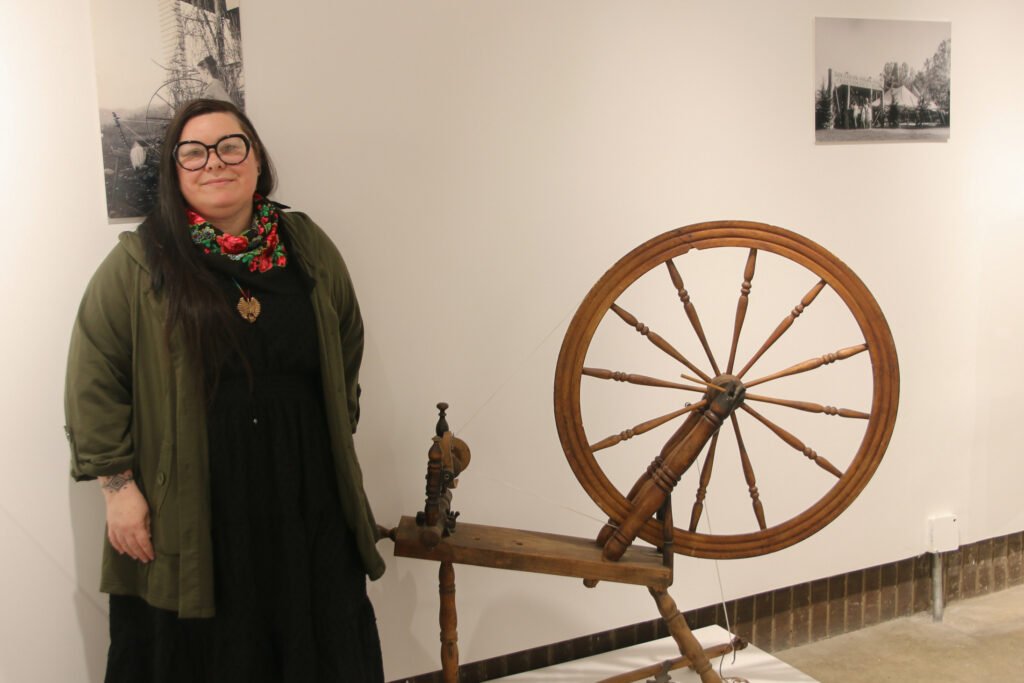
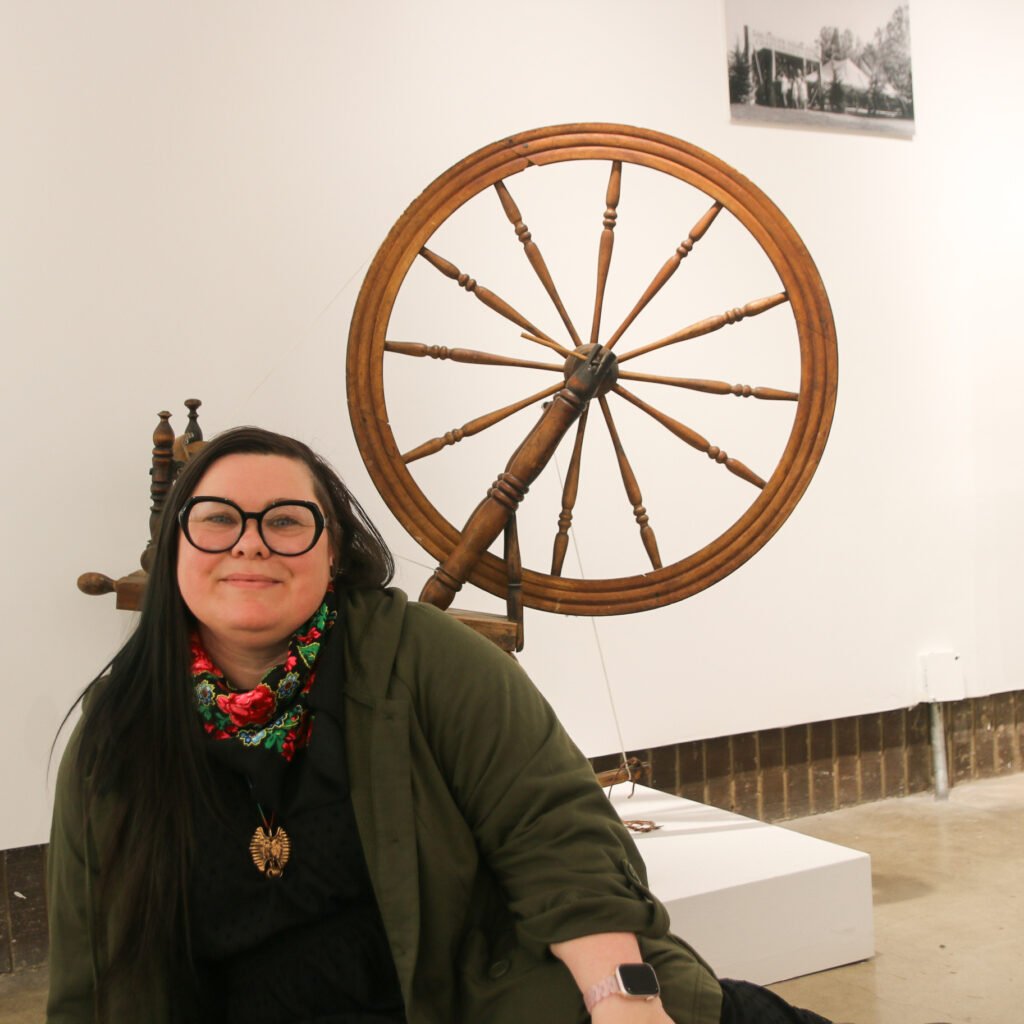
The 2024-2025 Kenneth R. Trapp Curatorial Fellow, Dr. Mathilde Frances Lind, has joined us for this year long fellowship! To learn more about Mathilde and what brought them to the arts and Arrowmont this year, continue reading below!
Q&A
Tell me a little bit more about yourself! Your life/work prior to arriving at Arrowmont and any interesting facts we should know about you!
I have a pretty unusual résumé! I have a PhD in folklore from Indiana University Bloomington, and I lived in Estonia in northeastern Europe for almost four years while I was doing my dissertation research. My decision to go back to graduate school started with becoming a textile artist, which led me to teaching craft classes and wanting to know more about the folklore of textiles. Prior to that, I worked at a natural foods co-op in Portland, Oregon.
I have had a wide variety of jobs. Probably the most interesting one was as a milker on a goat dairy in the foothills of the Cascade Mountains, and I also worked in construction as a carpenter’s apprentice deconstructing and rebuilding old houses in Oregon. While I was in Estonia, I did academic editing, and I led writing retreats and trainings for students and faculty at the University of Tartu and the Estonian National Aviation Academy. I returned to the States in 2022 to work as a public folklorist in Amish country in the North Country of New York State, but I took a different path after suddenly losing my dad in the summer of 2023.
What drew you to the Arrowmont Curatorial Fellowship?
Dad passed about three weeks after I graduated with my doctorate. I wanted a change, and my mom needed support, so I left New York, lived with her in Florida for a little while, and started looking for temporary positions that could help lead me back to museum work.
I actually stumbled across the fellowship on social media. I knew of Arrowmont because, as a folklorist, the Appalachian Craft Revival is kind of legendary in my field, and Gatlinburg was an important weaving center in that movement. I was drawn to apply mostly by the opportunity to dive into research on the collections and their historical context. I also love mountains, so spending almost a year in Gatlinburg was a very appealing prospect! As an artist, being around other artists, taking craft classes, and doing research in a beautiful natural setting seemed like just the thing at this point in my life.
You’ve been doing a lot of digging into the collections and archives since arriving! What do you enjoy most about the research process?
Arrowmont has wonderful collections and archives covering the 1920s to today, and there are also still a lot of human connections in the community with the people who made the textiles and whose photos are in the old Pi Phi scrapbooks. I love learning about people’s lives and then not only finding photos of them but also being able to handle the things they made. It has also been so much fun to go out into the community and tell them about what I have been learning. I’ve had a few incidents where I have mentioned someone or shown a photo, and one of the people present said “That’s my great grandma!” or had some other personal connection.
I am not interested in doing research that just disappears into a dusty university library. I want my work to be meaningful to people, and I think that what I am doing now is relevant and interesting to a living community. Probably the best thing is when I visit someone, and they send me down the rabbit hole with a family story or a key piece of information. It’s so helpful when community members tell me what is important to them and give me a starting point for doing that research. Then I know that my work is more meaningful than anything I would just come up with out of my own head.
What has been the most interesting discovery you’ve made as you explore the Arrowmont collections and archives?
I have been enjoying the weaving reports from Winogene Redding, who directed the Arrowcraft weaving program (which preceded the founding of Arrowmont as it is today and was part of the early Pi Beta Phi Settlement School) during its most active period, particularly from the mid-1920s to the end of WWII. She was a very good writer, and her annual reports are like snapshots of life at the school and in the Gatlinburg area. She gives us a sense of Arrowcraft’s real impact on local women’s lives, for example, telling us about pregnant women who were able to prepay a doctor for childbirth or women who used their weaving money to buy a sink or a washing machine. She also talks about how the weaving program helped support families during WWII despite very limited supplies and sales. All the weavers just got a little less so that everyone could have something.
Winogene’s writing never makes me feel like she looked down on the weavers she worked with; instead, she clearly sees them as colleagues and friends. She helped them with their community projects, not just with their weaving. For example, when Lula Mae Ogle wrote a play, Winogene directed the performances, and the weavers acted. The proceeds helped them establish an emergency fund for weavers in need and travel a little, which they hadn’t been able to do before. Another thing I love about Winogene’s writing is how sympathetic she is to the needs of the weavers. She loves the mountains, but she argues against overly romantic ideas of mountain life, saying that these women deserved things like labor-saving appliances to make their lives a little less difficult. At the same time, they deserved a chance to support their families without totally upending their lives to go work in a city, and the weaving program let them work out of their homes and hold onto everything about mountain life that they wanted to keep. The work they did for Arrowcraft supported their lives in this beautiful place and helped them gain a little more security and ease than they’d had before.
You’re curating an exhibition in the Sandra J. Blain Galleries in February. How has this research informed your planning for this?
I’m working on an exhibition called Common Threads, which will focus on the small household textiles in the collections. The inspiration came from learning about these women’s lives and the economy of handmade things in which women were both makers and buyers long before women had the kind of independence that we have today.
Can you share any specifics about the exhibition? Everyone loves a teaser!
I want the exhibition to help us both reflect on women’s lives and creativity in the past and to remember that we can support each other and come together in community even in very dark times. There is a lot of division right now, not just in the US, and I think we’ve gotten to the point where we seem to live in totally different worlds from people who do not share our views. But we are still neighbors, so we need to learn how to live together.
I think a lot of that work happens in the small, intimate spaces in life, like the home or at gathering places like libraries, community centers, cafes, etc. Folklorists like me love to talk about “folk groups,” which are just two or more people who have something in common. But what makes them a community? Well, it’s when a group does things together and nurtures a bond of mutual action and shared experiences.
I’ve been thinking about how the exhibition itself can include a space for coming together in community, so I am working on designing an area where people can sit, work on a little craft project, visit with each other, and go through old photos together.
You are also a textile & fibers artist. How has your work as an artist influenced your work as a curator and vice versa?
For me, being a practitioner is essential. I have curated several smaller exhibitions based on fieldwork with artists, and being an artist heavily influences the questions I ask and my ability to understand artistic processes. The tricky part is trying to translate this into something a general audience can understand.
Working with textiles is very, very slow. As a textile maker, I appreciate the time and skill that go into making. When I look at handmade things, I tend to examine them closely and think about the processes that went into making them or even learning how to make them. As a curator informed by craft practice, my goal is to help people connect with the lived reality of making, to show that it is a normal part of the human experience and not just an extraordinary activity set aside from daily life. It’s worth our attention and appreciation, and it’s also something that we can aspire to doing ourselves if we dedicate the effort.
What has been the most valuable thing you’ve learned in your fellowship so far?
For me, it has been an important way to gain more experience working with collections and galleries in a very different setting. Before Arrowmont, I had mostly curated small exhibitions with a strong educational component, so they had lots of text and featured objects that helped tell a story. Working in more of an art gallery setting is totally different. Here the objects get much more room to breathe and speak for themselves. It has been so helpful to see what goes into this kind of exhibition, and it has given me a much broader range of curatorial skills and experience.
We’re opening the 2025-2026 Curatorial Fellowship application in early December – Do you have any advice for hopeful applicants?
Show your passion and what you personally can bring to Arrowmont. The fellowship entails working with the permanent collection, so think about what kind of media you are interested in or any sort of themes you might want to explore using that collection.
Is there anything else you’d like people to know about you, the fellowship or Arrowmont? We’re all ears!
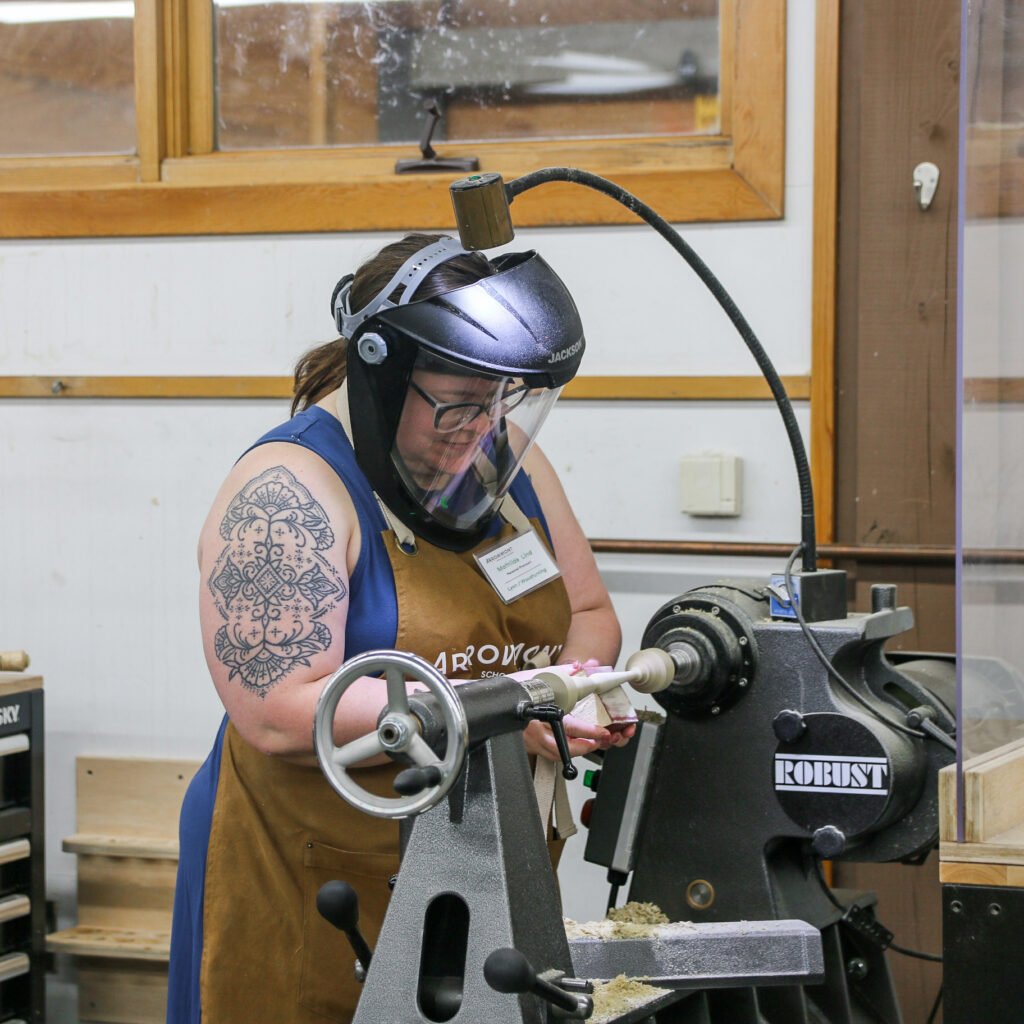
As an institution, Arrowmont has been supportive, accommodating, and reliable. I feel like I can be myself here, and my ideas are taken seriously and valued. Of course, I also love that I was able to take a workshop as part of my fellowship! It has been a great experience so far, and I am looking forward to the next phases of the fellowship, when I will finalize the details of the exhibition, install it, and then move on to some collections management tasks.
Arrowmont has a special collection that includes a lot of textile equipment like old spinning wheels, which are my specialty. I regularly restore antique spinning wheels and use them in my creative practice. After the exhibition is installed, I will turn my efforts to cleaning, stabilizing, and making specialized care recommendations for the large textile equipment. You can learn so much from that kind of close, hands-on attention to old tools, and it’s a pleasure to take care of them so that they can tell their stories to the next generation. I’m looking forward to finding out what Arrowmont’s spinning wheels have to tell me.
Are you interested in becoming the Kenneth R. Trapp Curatorial Fellow? Do you have a desire to advance craft knowledge and preservation?
Contact Heather F. Wetzel at [email protected] or call 865-436-5860 extension 22 for more details for the 2025-2026 Fellowship!
